
ImportantCornea
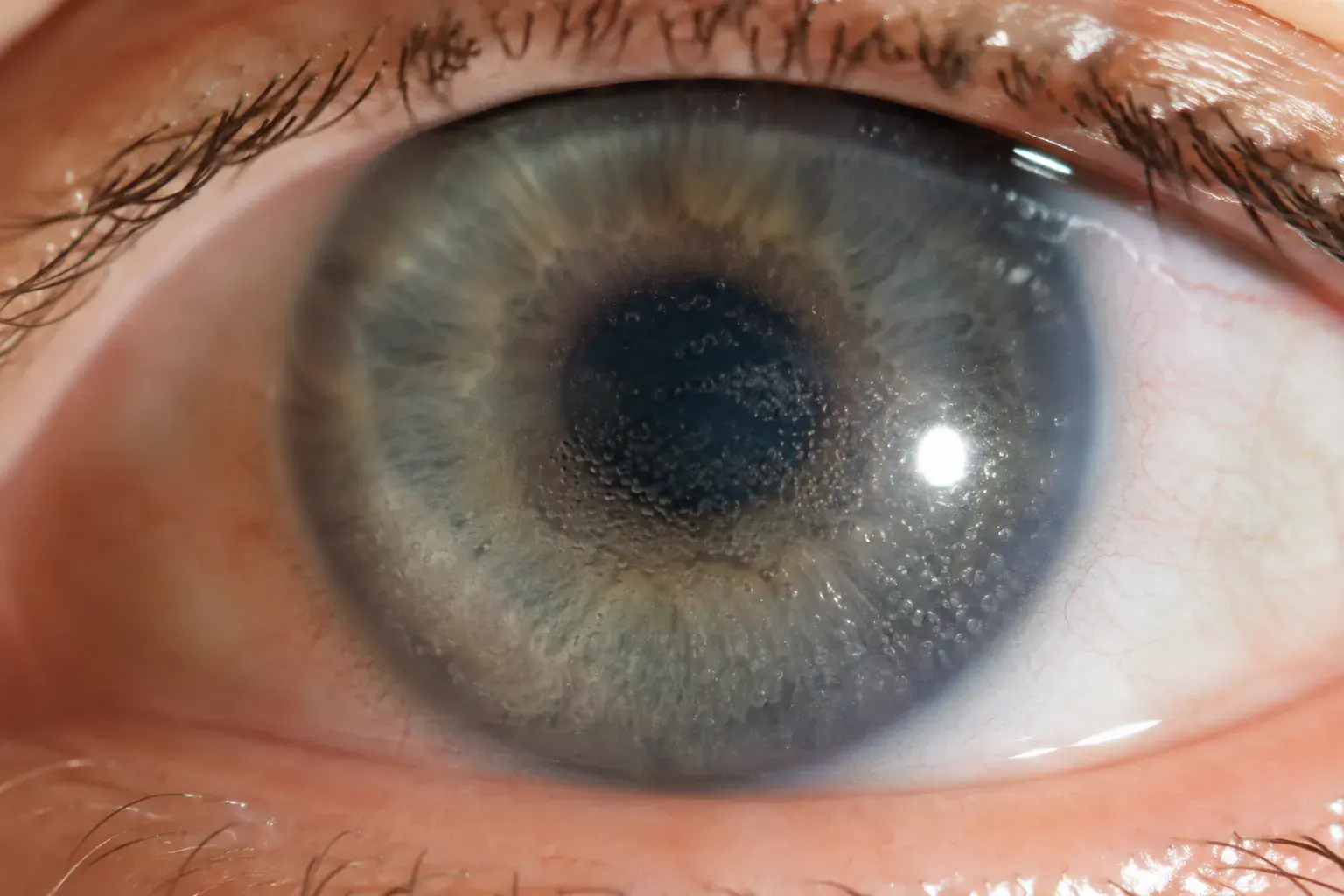
Fuchs’ Corneal Dystrophy
A cornea condition that can cause morning blur or glare.
What is it?
Fuchs’ corneal dystrophy is a condition where cells on the inner layer of the cornea gradually deteriorate. It causes morning blurring and glare that may improve through the day as the eye dries out.
Common symptoms
- Blurred vision worst in the morning that improves through the day
- Sensitivity to light
- Seeing halos around lights
Risk factors
- Family history
- Female sex
- Age over 50
Prevention tips
- Attend regular ophthalmic examinations
- Seek medical attention for worsening morning blur or glare
- Follow postoperative instructions carefully after eye surgery
- Use prescribed medications as directed
- Maintain regular follow-up to monitor corneal health
Treatment overview
In early stages, hypertonic saline drops and a fan to improve morning vision help. Advanced cases with significant corneal oedema are treated with endothelial keratoplasty (DSAEK or DMEK).
Seek urgent care if you notice
- Sudden vision loss
- Severe or worsening eye pain
Related eye care tips
Have questions about your eyes?
This information is general education and does not replace a professional eye examination. If you are worried about your eyes, book an appointment.