
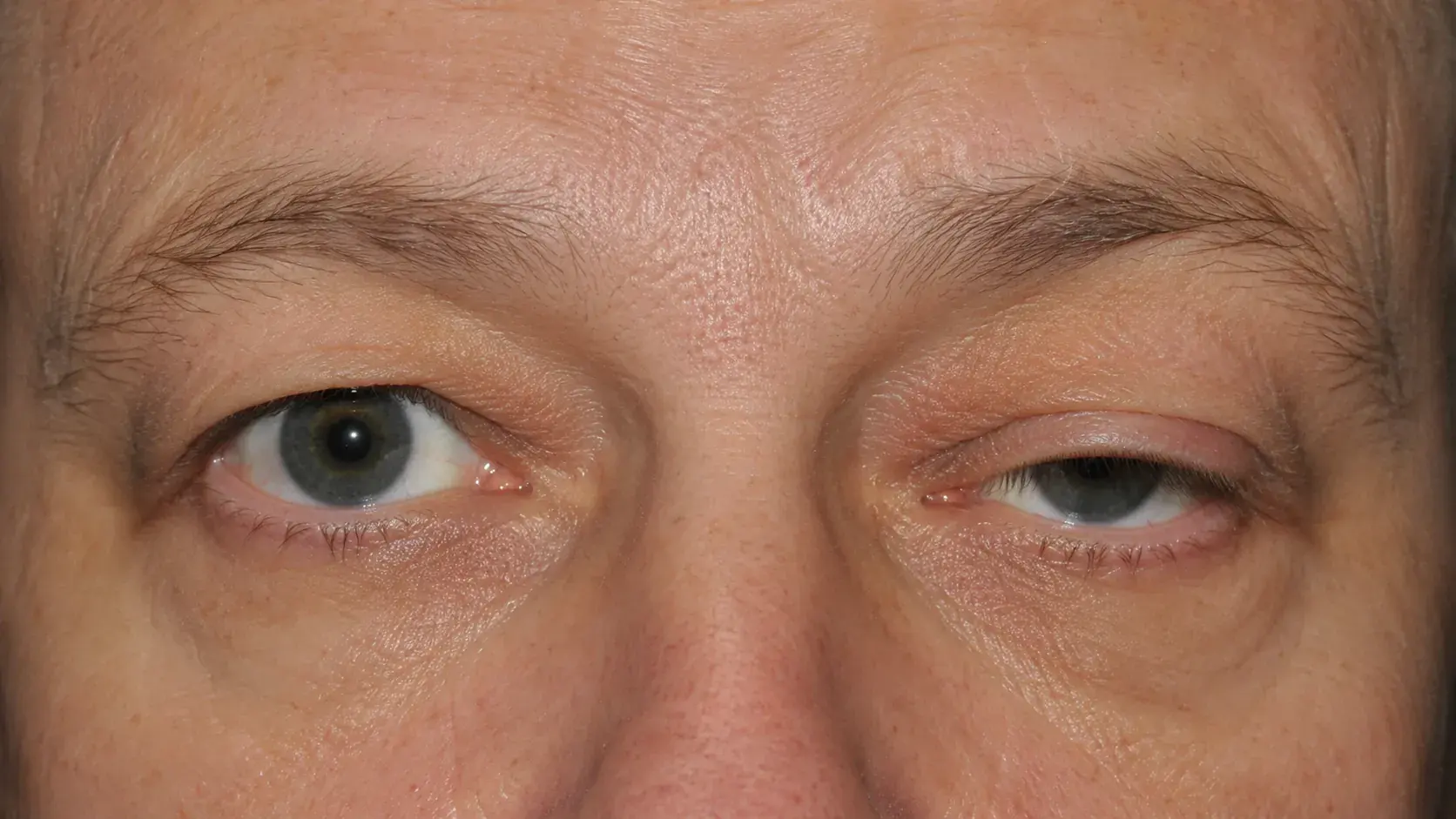
ImportantEyelid
Ptosis / Drooping Eyelid
A drooping upper eyelid that may be longstanding or new.
What is it?
Ptosis is a drooping of the upper eyelid. It can be present from birth or develop later in life. Depending on severity, it may affect vision and may need assessment to determine whether treatment is needed.
Common symptoms
- Drooping of one or both upper eyelids
- Partially blocked vision
- Head tilting backwards to see clearly
Risk factors
- Increasing age
- Previous eye surgery or trauma
- Neurological disorders such as third nerve palsy or Horner syndrome
- Myasthenia gravis
- Congenital eyelid abnormalities
Prevention tips
- Ensure appropriate follow-up for associated neurological or muscular disorders
- Seek medical attention if new or worsening eyelid drooping develops
- Adhere to regular follow-up appointments and prescribed treatment for underlying conditions
Treatment overview
Significant ptosis obstructing vision is treated surgically (levator resection or frontalis sling). Underlying causes such as myasthenia gravis must be excluded.
Seek urgent care if you notice
- Sudden vision loss
- Severe or worsening eye pain
Related eye care tips
Have questions about your eyes?
This information is general education and does not replace a professional eye examination. If you are worried about your eyes, book an appointment.