
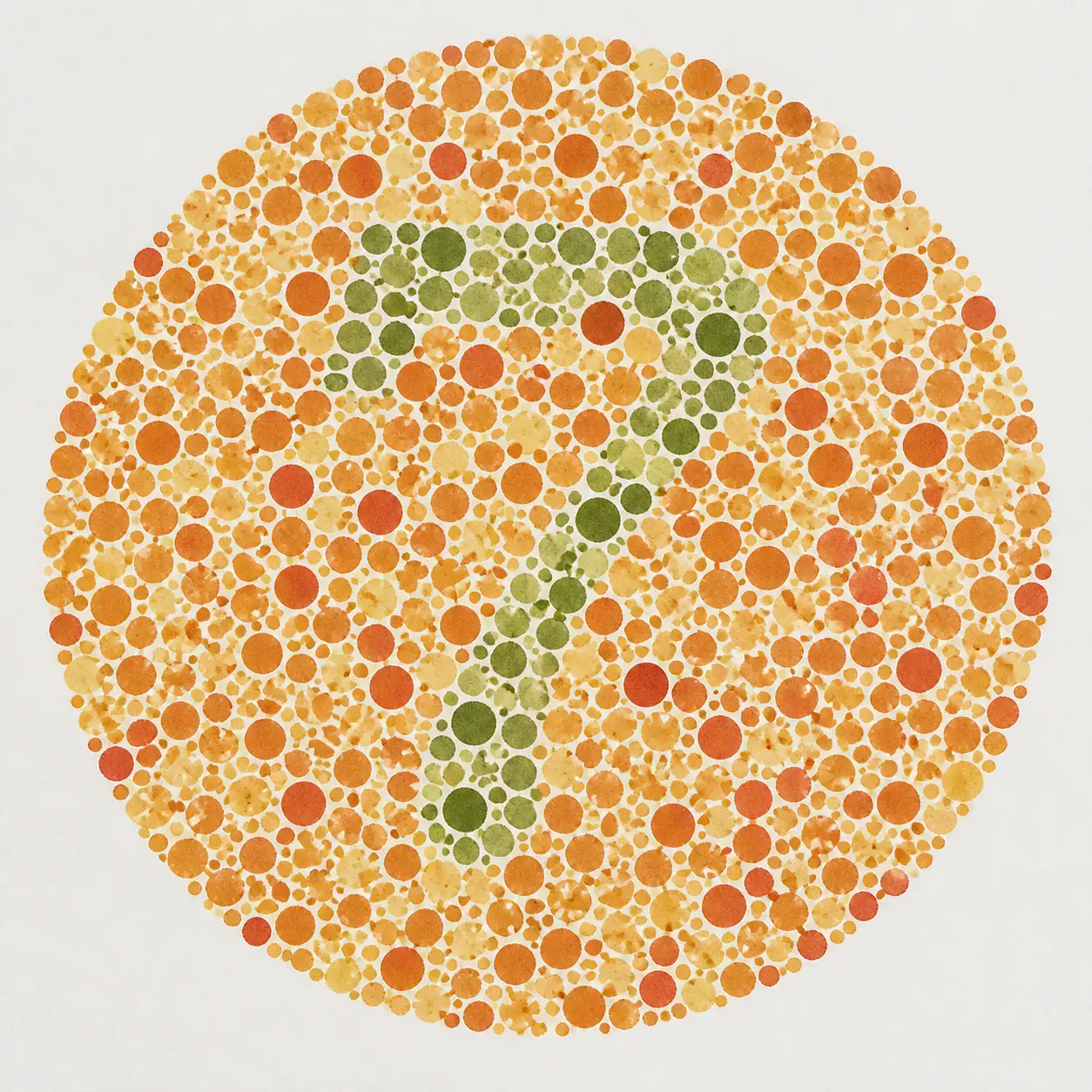
Color Vision Deficiency
Difficulty telling some colors apart, often noticed on color tasks.
What is it?
Colour vision deficiency (colour blindness) is a reduced ability to distinguish between certain colours, most commonly red and green. It is usually inherited and more common in males. There is no cure, but most people adapt well.
Common symptoms
- Difficulty distinguishing certain colours (commonly red and green)
- Colours appearing washed out
- Confusion between similar shades
Risk factors
- Family history of colour vision deficiency
- Male sex
- Inherited genetic mutations
- Optic nerve or retinal diseases
- Certain medications or chemical exposures
Prevention tips
- Attend regular eye examinations
- Seek medical evaluation for new changes in colour perception
- Use colour identification apps or accessibility tools when needed
Treatment overview
Most inherited forms of colour vision deficiency have no cure. Special tinted lenses or digital aids may help improve colour discrimination in some situations. Acquired colour vision problems require treatment of the underlying eye or neurological condition.
Seek urgent care if you notice
- Sudden vision loss
- Severe or worsening eye pain
Related eye care tips
Have questions about your eyes?
This information is general education and does not replace a professional eye examination. If you are worried about your eyes, book an appointment.